War Abroad, Pressure at Home: South Africans Navigate Economic Strain and Civic Revival
As the short but intense war triggered by Donald Trump’s military confrontation in the Middle East escalates into a wider geopolitical crisis, the ripple effects are being felt far beyond the bombs and battles. Oil routes are under strain, financial markets are nervous, and economies already battling sluggish growth are beginning to feel the squeeze.
For South Africa, where economic growth has remained stubbornly slow and unemployment painfully high, the consequences of the war are the hardest on ordinary citizens. Higher fuel costs, rising prices, and financial uncertainty are tightening household budgets at a time when many families were already struggling to stay afloat.
Against this tragic theatre of war and crime, the country’s financial markets ended the week on a negative note. On Friday, the Johannesburg Stock Exchange closed in the red, reflecting the cautious mood gripping investors as global tensions and domestic pressures join.
Yet while weekend headlines are filled with war and local bulletins often focus on crime, another quieter story is unfolding on the streets of Johannesburg. In pockets of the inner city, residents, businesses, and civic groups are taking matters into their own hands, South Africans working together to restore pride, safety, and functionality in South Africa’s largest metropolis.
Markets end the week lower
South Africa’s stock market closed weaker at the end of the week as global uncertainty weighed on investor sentiment.
The FTSE/JSE All Share Index (ALSI) finished Friday at 114,924 points, a decline of 1.73% from the previous close of 116,948. Trading during the day saw the index open at 117,079 before sliding to its session low of 114,924.
Among the major indices, the Top 40 Tradeable Index fell 1.83% to 107,285, while the Resource 10 Index recorded the sharpest drop, sliding 5.37% to 130,238. The Mid Cap Index declined 2.44% to 111,407, and the Small Cap Index slipped 0.64% to 104,354.
Some sectors managed to hold their ground. The All Share Industrials Index rose 0.66% to 138,748, while the Industrial 25 Index gained 0.74% to 130,243. The Financial 15 Index edged down 0.53% to 24,490, and the SA Property Index slipped 0.43% to 460.
Individual shares delivered mixed performances. Energy and technology counters provided some support to the market, with Sasol climbing 11.63% to R192.00. Hosken Consolidated Investments rose 3.69% to R161.75, while technology giants Naspers and Prosus gained 3.42% and 2.74% respectively. Thungela Resources also advanced 3.13%.
In currency markets, the rand showed modest strength, with the US dollar trading at R16.89, compared with the previous close of R16.95. The euro traded at R19.37, while the British pound stood at R22.36.
Commodity prices remained relatively steady. Gold traded at $5,022.11 per ounce, platinum at $2,042.10, and Brent crude oil at $103.81 per barrel.
Global markets reflected the same cautious tone. The S&P 500 stood at 6,632, the Dow Jones Industrial Average at 46,558, and Japan’s Nikkei 225 at 53,820.
In the cryptocurrency market, Bitcoin traded at $71,513, up 0.54%, while Ethereum was quoted at $2,106.94.
War-driven oil shock hits consumers
The conflict involving Iran, Israel, and the United States has thrown global oil markets into turmoil. Tanker traffic through the strategic Strait of Hormuz, one of the world’s most important oil shipping routes, has fallen sharply as hostilities intensified.
According to the International Energy Agency, the disruption represents one of the largest supplies shocks the global oil market has ever faced. Before the outbreak of hostilities, about 20 million barrels of oil per day passed through the narrow waterway. Since the conflict escalated, flows have dropped dramatically.
For South African consumers, the consequences are immediate.
Airlines, including FlySafair and South African Airways, have already raised ticket prices as aviation fuel costs surge. FlySafair has introduced a temporary fuel surcharge between March and May in an attempt to cushion the blow.
Economists warn that motorists could face one of the largest fuel price increases in the country’s history when new prices are announced in April.
The situation is also complicating decisions for the South African Reserve Bank. The central bank’s Monetary Policy Committee is scheduled to meet later this month, and rising oil prices could push inflation higher, making an interest-rate cut less likely.
Annabel Bishop, chief economist at Investec, said sustained oil prices between $85 and $90 per barrel could drive inflation above 4% later in the year, breaching the bank’s preferred inflation range.
At the same time, the weaker rand, rising shipping costs, and higher fertiliser prices are raising concerns about future food inflation.
For households already grappling with stagnant wages and high living costs, the timing could hardly be worse.
Neil Roets, chief executive of Debt Rescue, warned that higher fuel prices affect nearly every aspect of daily life.
“When fuel costs surge, it pushes up transport, food, and goods prices across the entire economy,” he said.
Kidnapping syndicates targeting everyday routines
Economic pressures are not the only concern facing South Africans. Crime, particularly kidnapping, remains a growing threat.
Recent data from the South African Police Service shows that nearly 4,800 kidnapping cases were reported nationally between October and December last year. That translates to roughly 53 kidnappings every day, with more than half occurring in Gauteng.
Security experts warn that criminals are increasingly targeting people during everyday activities such as shopping, commuting or collecting children from school.
Ruan Vermaak, communications manager at crisis-response organisation CrisisOnCall, said many victims appear to be selected after criminals study their routines.
Business owners, professionals, and parents are among those most frequently targeted.
Incidents often occur in locations that should feel relatively safe — including residential complexes, shopping mall parking areas, and school pickup zones.
In some cases, victims are briefly abducted while criminals steal their vehicles. In others, families are contacted and ransom demands made.
Vermaak also warned that criminals are increasingly using social media and unsolicited phone calls to gather information about potential victims.
Authorities are urging residents to remain vigilant, report suspicious activity, and avoid sharing personal information with unknown contacts.
Reclaiming Johannesburg from the ground up
Despite these challenges, signs of civic renewal are emerging in the heart of Johannesburg.
In the streets of Marshalltown, where commuters move between historic buildings and busy cafés, a civic initiative known as Jozi My Jozi is quietly working to restore pride in the inner city.
The organisation, led by chief executive Innocent Mabusela, brings together businesses, residents, and civil society groups to coordinate projects to improve safety, infrastructure, and public spaces.
What began as modest volunteer work has grown into a network of about 140 partners, spanning corporates, universities, and community organisations.
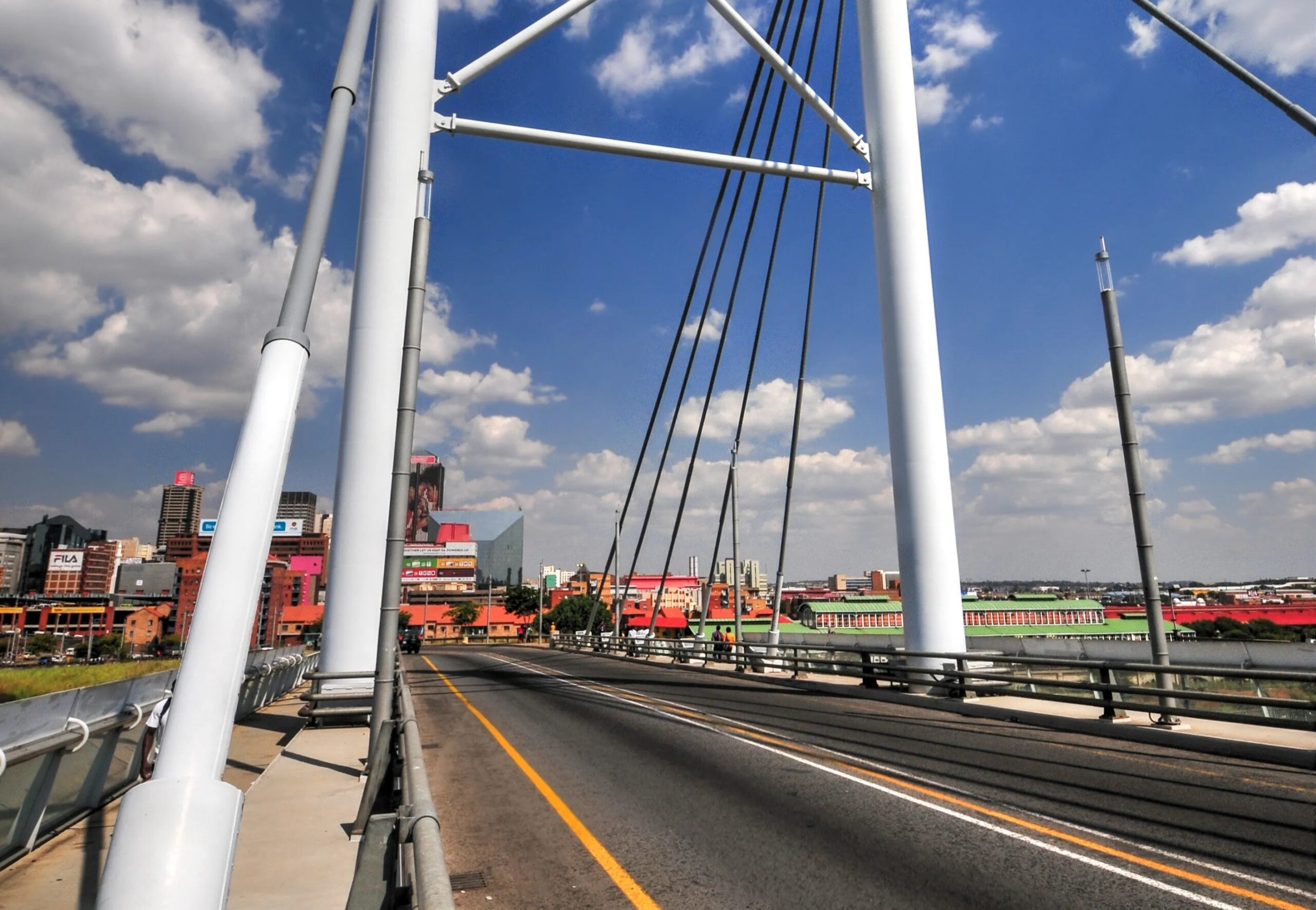
Projects already underway include the rehabilitation of the Nelson Mandela Bridge, the installation of solar-powered streetlights in key corridors, and plans for integrated emergency response centres linking police and private security.
Community campaigns such as Babize Bonke also highlight artists, entrepreneurs, and social activists who continue working to revitalise the inner city despite economic and infrastructure challenges.
Student chapters at the University of the Witwatersrand and the University of Johannesburg encourage young people to participate in civic projects, while digital hubs are introducing coding and robotics training for local youth.
For Mabusela, the aim is simple: restore hope in a city that has often been defined by its problems.
Notice and Disclaimer
This article is provided for general information and educational purposes only and does not constitute financial advice as defined by the Financial Advisory and Intermediary Services Act, 2002 (FAIS Act). The content should not be relied upon as a basis for making any investment decisions. Please consult with a licensed financial advisor to determine if such investments are appropriate for your individual circumstances.
Everest Wealth Management (Pty) Ltd is an authorised Financial Services Provider (FSP 795) and a registered credit provider NCRCP 21504.