South African Wine Gains Traction in China as JSE Falters Amid Resource Losses
South African wine is gaining traction in China, a market long dominated by domestic baijiu, as Beijing prepares to implement a zero-tariff policy on imports from 53 African nations starting May 1. The move is expected to reduce costs for importers and expand opportunities for wineries seeking market share in Asia’s largest consumer market.
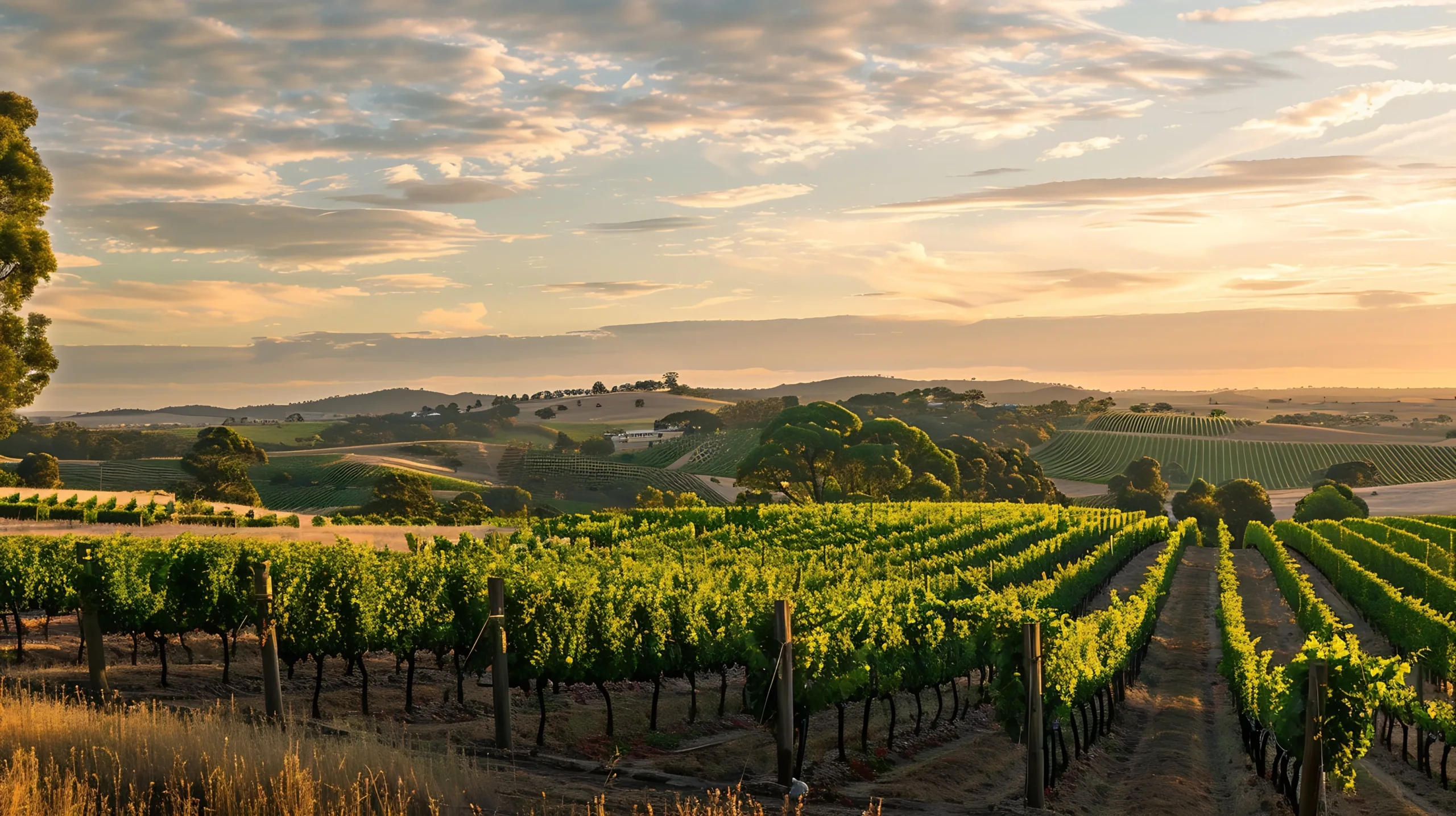
At Diemersdal Wine Estate in Durbanville, Cape Town, production lines continue to operate at full capacity following the recent harvest. Forklifts transport empty bottles to the processing line, where they are cleaned, filled, sealed, labelled, and packed for export.
The estate produces Sauvignon Blanc and Pinotage, the latter a uniquely South African variety that has gained recognition among Chinese consumers over the past two decades. Shipments to China once rose to as much as 10% to 15% of total output in 2018 before softening amid COVID-19 disruptions and shifts in global demand.
Steffi Layer, Diemersdal’s international marketing and sales manager, said the zero-tariff policy could revitalise exports and enhance the brand’s position in China. She explained that the removal of tariffs would make South African wine more competitive on the shelf while encouraging importers to revisit the market.
Layer highlighted growing Chinese interest in red wine, reflecting a deepening appreciation of food and wine culture, and suggested that the policy could create opportunities across pricing, market expansion, and premium segment growth.
The winery has recently strengthened its representation in Asia, attending trade shows and refining its product offerings to match local tastes, while noting that increased exports could also benefit freight operators, importers, and the broader supply chain.
JSE Closes Lower as Resource Stocks Drag
The Johannesburg Stock Exchange ended yesterday in negative territory, with resource stocks weighing on the market as investors tracked rising geopolitical tensions and firm oil prices. The All Share Index fell 0.99% to close at 114,968 points, down 1,155 points from the previous session. Trading during the day fluctuated between 114,153 points and 116,119 points, reflecting broad-based market pressure.
The Top 40 Index declined by 1.04%, while the Resource 10 Index fell 2.39%, leading sector losses. Industrials eased 0.33%, and financials slipped 0.21%, while mid-cap and small-cap stocks fell 0.59% and 0.47%, respectively. Mining counters were the primary contributors to the decline. Ninety One plc both lost more than 9%, while Impala Platinum dropped 5.9%. Gold stocks also retreated, with Gold Fields down 3.65% and AngloGold Ashanti losing 2.33%.
Conversely, Sasol recorded a gain of 9.04%, closing at R226.90 and lifting the chemicals sector, which advanced 7.28%. Grindrod and Karooooo were among other notable gainers, illustrating selective strength amid widespread losses. Analysts noted that investors remained cautious ahead of the US deadline for Iran to reopen the Strait of Hormuz, with any disruption expected to influence oil prices, currency movements, and broader risk sentiment.
Gold edged slightly lower to $4,650 n ounce, while Brent crude rose to $110 a barrel amid Middle East concerns. Higher oil prices have already increased local fuel under-recoveries, with early estimates pointing to petrol increases of about R4.70 per litre and diesel rises of over R13 per litre. Economists highlighted that the rand, while relatively steady in recent sessions, remains highly sensitive to global energy developments that could affect market confidence.
The broader commodities environment contributed to market uncertainty. While gold posted minor losses, base metals were mixed.
Platinum and palladium edged lower as industrial demand projections softened, while the oil price increase was tempered by speculative activity in energy derivatives.
Harlequin Sports Club Faces Tshwane Demands
The council claims that the land at 62 Totius Street is being used in contravention of zoning regulations and must be restored to its original condition. The notice effectively demands the demolition of rugby fields, bowling greens, a cricket field, squash courts, clubhouses, pavilions, and a restaurant.
Chaka Croukamp, the chair of the Harlequin club, stated that management applied for rezoning in 2021 and is still awaiting council approval. The notice includes threats of fines, criminal prosecution, and punitive property rates, which could increase from R8,109 to R243,387 per month, according to Ben Espach, director of valuations at Rates Watch.
The Harlequin club, established in 1902, hosts multiple sports clubs and a rugby academy for children aged eight to 18. Schools in the area also use the facilities, and members of the public can access the club’s restaurant and other amenities.
In parallel, the council is engaged in a process to formalise 17 illegal developments in Pretoria. Although it could levy punitive property rates on these developments, the council has decided not to, despite being legally entitled to do so.
FirstRand Considers Exiting UK Market After £750 Million Provision
The redress arises from an investigation by the UK Financial Conduct Authority into failures by motor finance companies to properly inform customers about commissions and cover agreements. Aldermore’s subsidiary, MotoNovo, is a significant part of the liability.
FirstRand stated that the FCA’s redress calculation, which is not loss-based and imposes higher interest rates, has resulted in a financial impact exceeding the group’s expectations. A further pre-tax provision of £510 million, approximately R11.9 billion, was added to address business written after regulatory changes in 2021. This compares to just £275 million of profit earned from UK motor finance activities over the past decade.
The bank said that the level of provisioning may constrain capital available for UK operations and limit growth, although it maintains that Aldermore itself remains a sustainable business with a capable management team. FirstRand indicated that it will work with regulators and the Aldermore board to ensure an orderly ownership transition. Despite the provisioning, dividends calculated on earnings before tax will remain payable.
Notice and Disclaimer
This article is provided for general information and educational purposes only and does not constitute financial advice as defined by the Financial Advisory and Intermediary Services Act, 2002 (FAIS Act). The content should not be relied upon as a basis for making any investment decisions. Please consult with a licensed financial advisor to determine if such investments are appropriate for your individual circumstances. Everest Wealth Management (Pty) Ltd is an authorised Financial Services Provider (FSP 795) and a registered credit provider NCRCP 21504.