Markets Stumble as G20 Turbulence Dominates, but Wiese Strikes a Note of Defiant Optimism
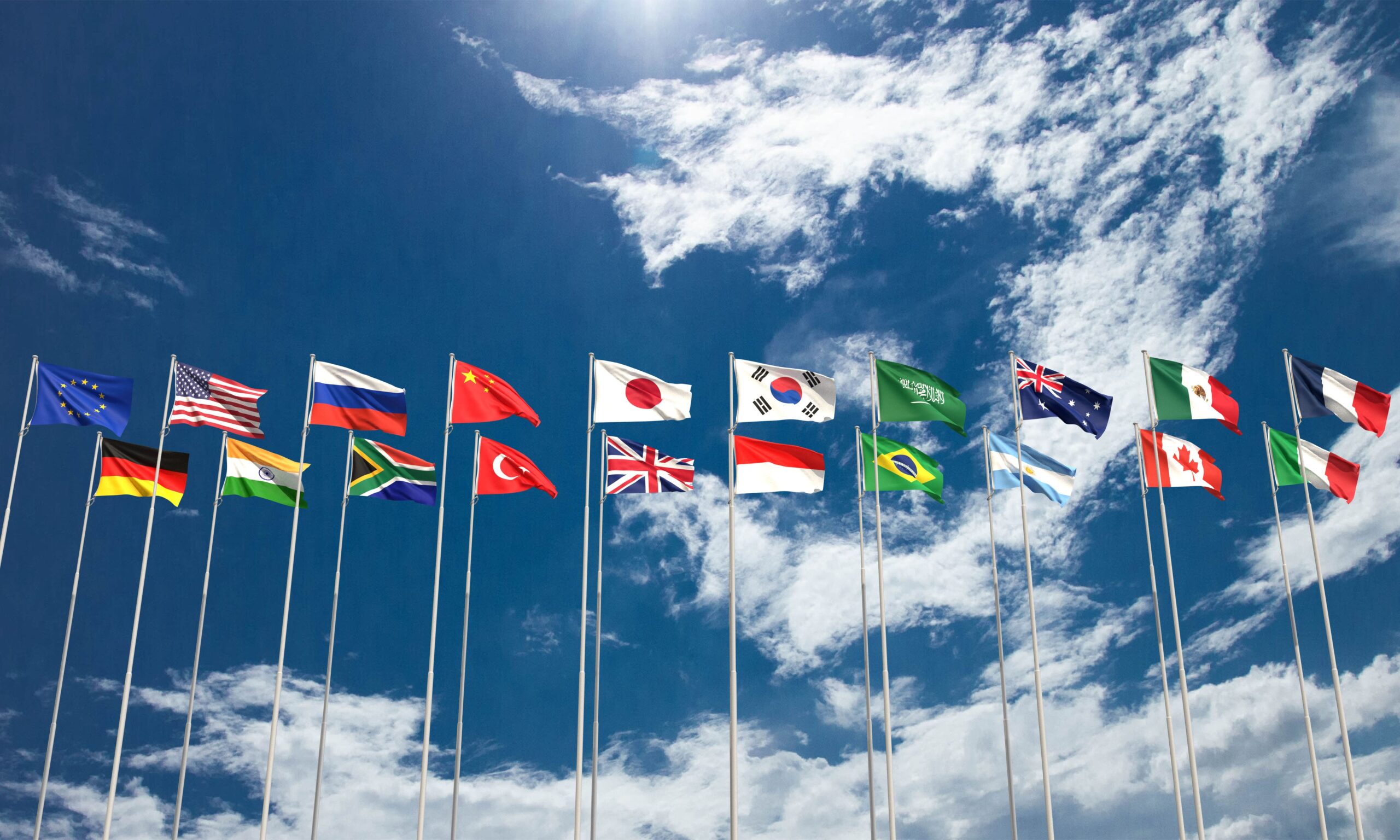
South Africa closed out a bruising trading week with investors rattled, global politics intruding sharply on local sentiment, and the G20 summit in Johannesburg turning into a diplomatic spectacle.
Yet in the middle of the noise, billionaire Christo Wiese cut through with a message that landed somewhere between blunt realism and surprising optimism.
South Africa, he argued, could be “transformed within a year” if government simply steps aside and gives the private sector the space to operate.
It was an unusually confident assessment on a day when the JSE looked tired, vulnerable and in need of direction.
The All-Share Index fell 2.02% to 109,641 on Friday, ending a session that lacked momentum from the opening bell. The market briefly traded firmer at the start, but buyers simply weren’t committed.
By midday it had drifted to a low of 108,263 before clawing back slightly into the close.
Compared to the highs above 115,000 seen earlier this month, the retreat felt heavy, and traders were clear that sentiment had taken a knock.
But step back, and the picture is far less dramatic: the JSE remains up 17% year-to-date and more than 30% over the past 12 months. Friday was a rough day, not the start of a structural reversal.
Resources Take the Hardest Hit
The steepest damage was in resources, where the selling was broad, aggressive and largely driven by global concerns rather than company fundamentals.
The Resource 10 index sank 3.64%, dragged lower by sharp declines across gold and platinum counters.
AngloGold slid 5%, Gold Fields lost 3.8%, Sibanye dropped a punishing 7.1% and DRDGold fell 4.9%.
Gold, which has been one of the year’s standout performers, softened slightly as traders reassessed safe-haven appetite ahead of key geopolitical and inflation data.
Even though the dip in the gold price was minor, investors used it as a reason to lock in profits after an extraordinary rally in 2025.
The logic was simple: if major economies signal firmer interest rates or if political tensions cool even marginally, the metal’s meteoric rise could flatten out. Those fears filtered immediately into gold miners.
Platinum-group metals faced similar headwinds. Prices for platinum and palladium moved lower on weak signals from the automotive sector and continuing uncertainty over global manufacturing demand.
For South Africa — the world’s largest producer of these metals — even small price shifts tend to ripple through mining valuations.
This week was no different. The softness can be translated into heavy selling of Platina Resources ltd (PGM)-focused counters, compounding the broader pressure on the resources sector.
Iron ore was steadier, though not strong enough to offset declines elsewhere. Demand indicators from Asia remained mixed, and even though supply constraints persisted globally, sentiment wasn’t supportive enough to lift the miners.
Coal, typically resilient at this time of year due to northern hemisphere winter demand, traded flat to slightly lower. This was driven partly by geopolitical caution and partly by traders unwilling to take risky positions ahead of next week’s data releases.
In short: commodities were directionless, and that indecision spilled straight onto the JSE.
Defensive Counters Show Some Spark
While resources bled, pockets of the market held up reasonably well. Investors rotated into defensive stocks — a classic pattern during periods of uncertainty.
Property group Hammerson climbed 5.57%, PHP rose 3.78%, and AB InBev added 3.61%. British American Tobacco and Growthpoint were steady, offering stability as market volatility increased.
Heavier counters like Naspers and FirstRand traded in large volumes as investors shuffled rather than abandoned positions. The movement was tactical, not panicked — a sign that caution, not fear, is driving sentiment.
Rand Holds Firm Despite the Noise
If the equity market felt unsettled, the rand delivered the opposite: a surprisingly uneventful day.
The currency held at R17.38 to the dollar, barely moving despite the diplomatic theatrics dominating the G20. Against the euro (R20.00), the pound (R22.75) and the Australian dollar (R11.21), it stayed comfortably within its recent ranges.
In a week when South Africa became the centre of a global political storm, a stable currency was the closest thing to a small victory.
Global Markets Mirror Local Uncertainty
Market anxiety wasn’t a uniquely South African phenomenon. Asian, European and US markets all closed weaker or flat.
The Nikkei drifted into the red, Europe moved sideways on thin volumes, and both the NASDAQ and S&P 500 showed little appetite for risk.
The world is firmly in “wait and see” mode — waiting for clarity on inflation, waiting for election signals from major economies, waiting for geopolitical fires to cool.
The G20 summit, rather than settling nerves, only deepened the global mood of caution.
Crypto Finds a Pulse
Against the gloomier backdrop, cryptocurrencies showed mild signs of life. Bitcoin rose 1.89% to $86,764, while Ethereum, Solana and Ripple all posted modest gains. It wasn’t enough to undo recent losses, but it did show that speculative appetite hasn’t disappeared — it’s just subdued.
G20 Drama Overshadows Substance
The G20 summit in Johannesburg veered into political theatre after the United States boycotted the event entirely, accusing South Africa of “protocol breaches” and turning the presidency into a political tool.
President Cyril Ramaphosa closed the summit with a carefully restrained final address, reminding delegates that South Africa will hand the presidency to the United States (U.S.) next year — diplomatically emphasising continuity even as Washington distanced itself.
Behind the scenes, sherpas from 19 countries worked to finalise an outcome declaration. Every member except the absent U.S. endorsed it. Argentina withheld its support for the final communiqué, but the core themes — climate, gender equality, global conflict and multilateralism — remained intact.
IBSA Signals a Strategic Counterweight
U.S. president Donald Trump’s renewed tariff campaigns have driven India, Brazil and South Africa back into closer alignment.
The leaders of the three nations revived the IBSA dialogue for the first time in more than a decade, signalling a renewed determination among emerging markets to push back against Washington’s unilateral economic tactics.
For South Africa, IBSA provides a more balanced platform within the broader BRICS grouping — one less dominated by China and Russia.
US Business Shows Up — Even as Washington Stays Away
Despite Trump’s boycott, U.S. corporates were highly visible. Walmart formally opened its first Walmart-branded store in Africa during the summit week, a symbolic endorsement of its long-term commitment to South Africa.
The G20 handover proceeded smoothly, with American business delegates praising South Africa’s leadership and signalling stronger future engagement.
Important Notice and Disclaimer
This article is provided for general information and educational purposes only and does not constitute financial advice as defined by the Financial Advisory and Intermediary Services Act, 2002 (FAIS Act). The content should not be relied upon as a basis for making any investment decisions.
Please consult with a licensed financial advisor to determine if such investments are appropriate for your individual circumstances.
Everest Wealth Management (Pty) Ltd is an authorised Financial Services Provider (FSP 795) and a registered credit provider NCRCP 21504.